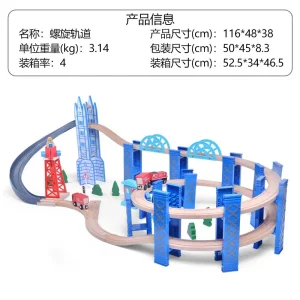
Engineered with industrial precision and localized for Southeast Asia's growing early-education sectors.
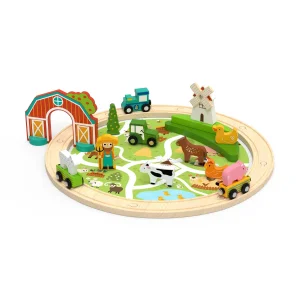
The global shift toward ecologically sound play experiences is reshaping the commercial toy landscape. As businesses seek reliable supply partners, Ningbo Joodle Toy Co., Ltd. stands at the forefront of this industrial transition. Operating as a professional manufacturer specializing in the design, engineering, and mass-scale production of Montessori, educational, and FSC-certified wooden toy solutions, our company supports global distributors, importers, and regional brands looking for strategic advantages in production efficiency, chemical safety compliance, and raw material reliability.
In Southeast Asia—and specifically Malaysia—the market for high-quality wooden train sets is expanding rapidly. Growing consumer awareness regarding plastic degradation, alongside policy-driven advancements in early childhood education (under framework standards like Malaysia's National Preschool Curriculum KSPK), has positioned premium timber play sets as mandatory equipment for modern preschools (Tadika) and daycare facilities (Taska). This whitepaper details the structural dynamics of raw material procurement, local industrial demand, and the unmatched synergy between China's advanced manufacturing infrastructure and Southeast Asian market requirements.
Malaysia is traditionally known as an exporter of solid wood furniture, primarily leveraging domestic Rubberwood (Hevea brasiliensis). However, when it comes to precision toy manufacturing, particularly wooden train track networks, the requirement for high-density, splinter-free woods like European Beech (Fagus sylvatica) requires an intricate import-export logistics setup. The Malaysian B2B wooden toy ecosystem is shifting towards a hub-and-spoke model where high-precision tracks are sourced from specialized overseas CNC facilities and consolidated with domestic assembly lines or directly imported by regional educational distributors.
Key distribution hubs in Selangor (Klang Valley) and Penang act as regional gates for importing premium wooden train sets, re-exporting them to neighboring markets like Singapore, Brunei, and Indonesia. Importers require strict compliance with domestic safety certifications (such as the Malaysia MC mark, regulated under the Ministry of Domestic Trade and Consumer Affairs) alongside international guidelines.
Globally, the market for wooden toys is projected to reach USD 28.1 billion by 2030, driven by the EU and North American "plastic elimination" initiatives. Modern procurement agents are no longer just comparing prices; they analyze the carbon footprint of logistics, FSC chain-of-custody documentation, and computerized testing methods for toxic chemicals. This has elevated the status of manufacturers that combine state-of-the-art automation with strict compliance records.
Additionally, the modular nature of wooden train sets—which must maintain universal compatibility with legacy track standards—has turned the track-milling process into a high-precision discipline. A track slot off by a mere 0.2 millimeters will result in high friction, rendering electronic locomotive carriages useless and damaging B2B brand reputations.
| Material Parameter | European Beechwood (Joodle Choice) | Local Rubberwood (Hevea) | Typical Plastic/MDF Alternative |
|---|---|---|---|
| Bending Strength | Excellent (Suitable for thin interlocking track teeth) | Medium (Can splinter under cross-grain pressure) | Low (Subject to brittle fracture) |
| Splinter Resistance | High (Tight, straight grain pattern) | Moderate (Requires heavy lacquer sealing) | N/A (Wear leads to microplastic dust) |
| Climatic Resilience | Kiln-dried 8-12% moisture (resists warping in humid SEA) | Prone to expansion and mold under high humidity | High chemical degradation under UV exposure |
| Compliance Readiness | EN71 / ASTM F963 / MC Mark certified | Often contains high chemical preservatives | Requires heavy phthalate testing |
While Malaysia excels in raw raw rubberwood processing, the technological capability required for complex educational wooden toy setups requires specific machinery clusters located in specialized industrial regions of China, such as Ningbo.
Ningbo Joodle Toy Co., Ltd. utilizes automated CNC routers programmed to drill, route, and profile track systems with a margin of error within 0.05mm. This guarantees standard-compliant coupling connectors that snap together smoothly across global toy brands, eliminating loose fits that interrupt train path tracking.
We deploy high-capacity water-based UV paint cured tunnels. Unlike traditional lacquer shops that release high volatile organic compounds (VOCs), our system ensures a durable coating that passes the rigorous saliva test protocols of Europe (EN71.3) and North America (ASTM).
Situated in Ningbo, the world's busiest port hub, we offer swift freight consolidation routes to Port Klang, Penang Port, and Johor Port. This geographic advantage reduces maritime transit times down to 8–12 days, preventing warehouse stock-outs for retail chains in Malaysia.
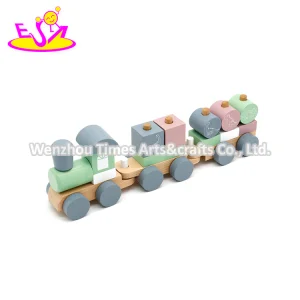
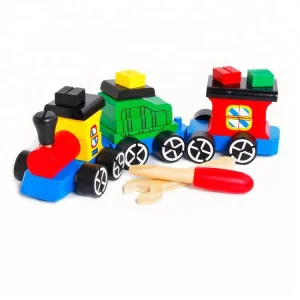
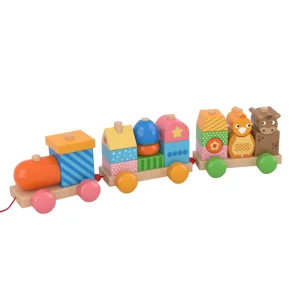
Heavy-duty, high-frequency use wood toy trains specifically built for shared educational environments and educational institutions.
Understanding user intent in wooden toy purchasing reveals that commercial buyers are focusing on specific applications. Our wooden train tracks are not merely items on a retail shelf; they serve highly specialized environments:
For B2B procurement managers working inside local entities, checking off international regulatory marks is vital. When importing toys, the customs authorities require documented proof of chemical safety. Joodle Toy provides full safety documentation for:
Compliance with EN71-1. We test tensile strength on small parts, including magnetic nodes, ensuring children cannot detach and swallow them.
Compliance with ASTM F963 (Soluble Heavy Metals). Every run of water-based lacquer is certified lead-free, cadmium-free, and mercury-free.
Crucial for tropical climates like Malaysia. Our timber is kiln-dried to exactly 8% to 12% moisture content, preventing fungal rot and structural warping under humid storage.
Take a look inside our high-tech manufacturing plant. We verify raw material moisture levels, process with CNC tools, apply paint via automatic spray, and test for structural safety.
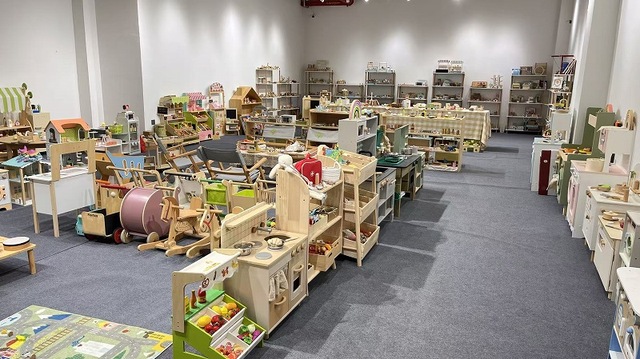
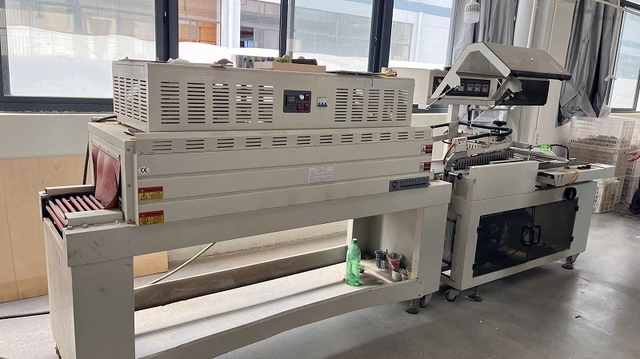
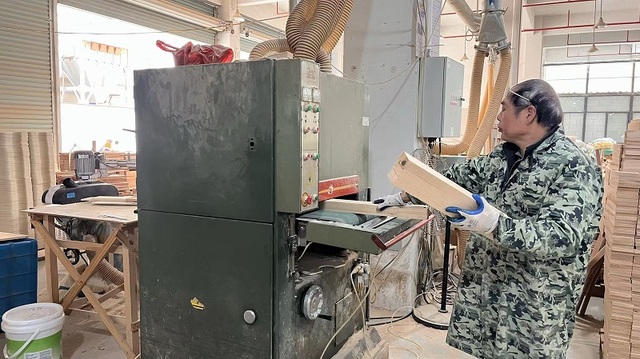
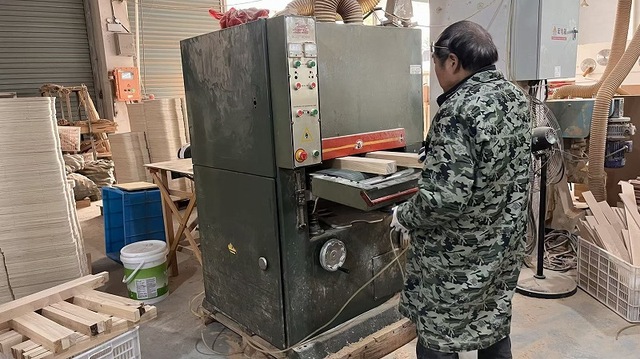
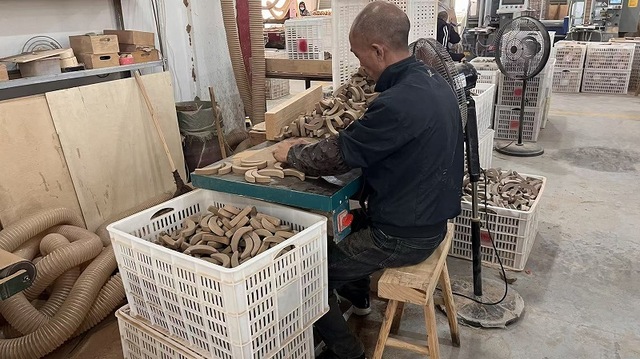
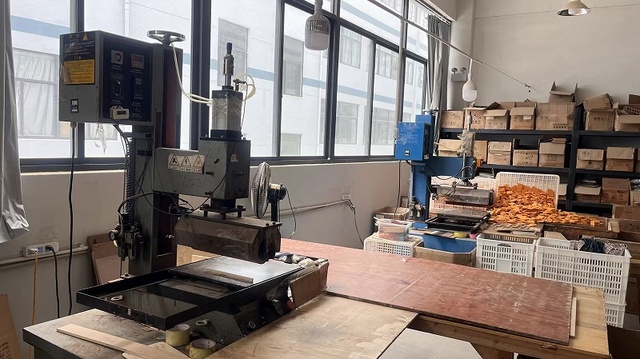
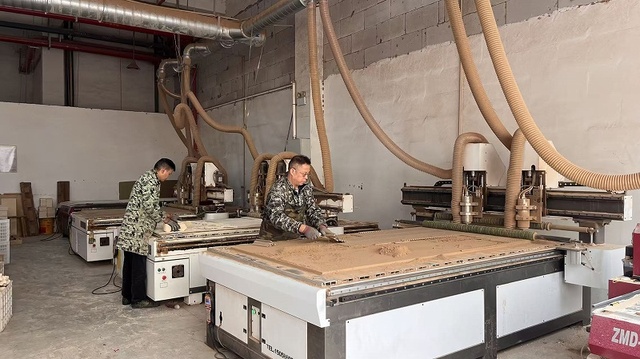
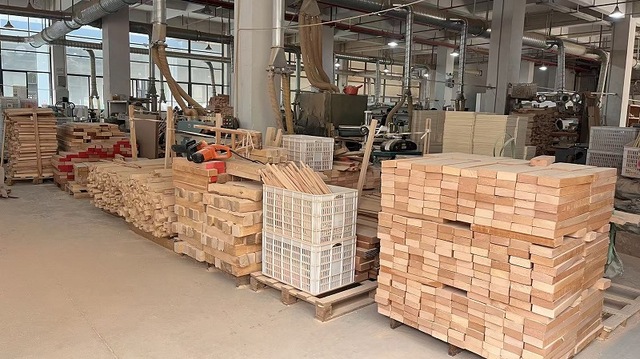
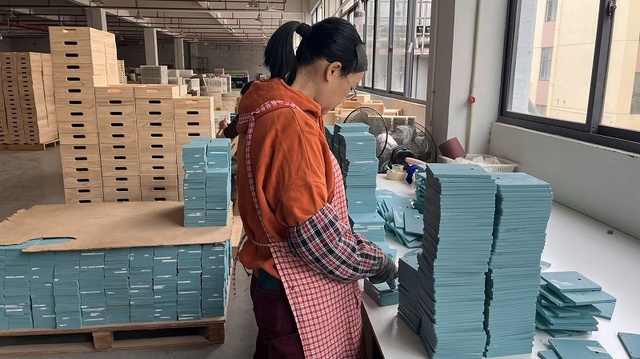
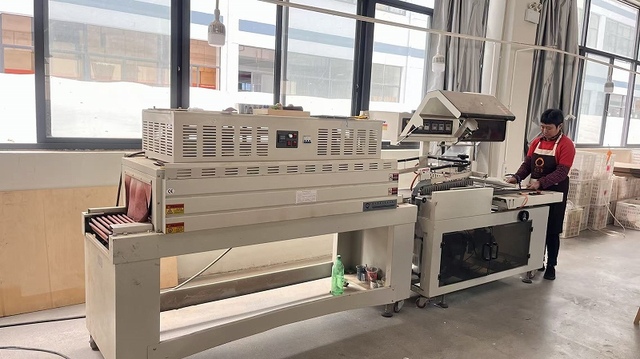
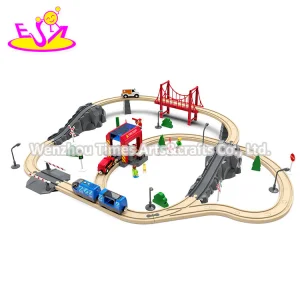
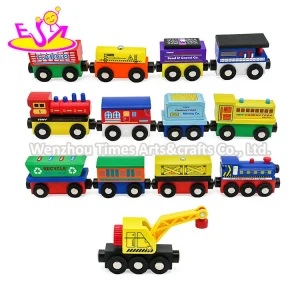
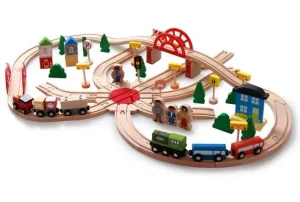
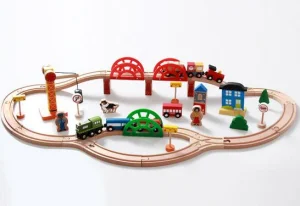
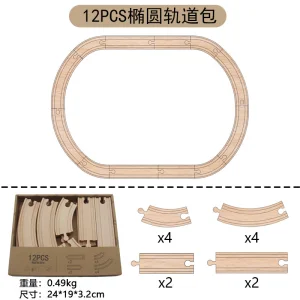
Explore our main production runs. Available for direct container export, complete with customized outer packaging and private label printing.
Technical guidance for B2B buyers, purchasing departments, and educational distributors looking to import wooden train systems.
Although Rubberwood is highly abundant in Malaysia, it is a softer wood with open grain structures that are prone to splintering under high-stress shear loads (e.g. when children push tracks sideways). Beechwood features a high density (approx 720 kg/m³) and a closed-pore structure. This ensures the male interlocking connectors of the track remain intact, preventing sharp breaks. Furthermore, Beechwood holds CNC routing dimensions far better, maintaining a stable cross-brand track spacing of 20mm with close tolerances.
We provide comprehensive laboratory testing documentation (SGS, TUV, or Intertek) that aligns with Malaysia’s Consumer Protection (Safety Standards for Toys) Regulations. This includes EN71 parts 1, 2, and 3, and ASTM F963. This ensures smooth customs clearance at major Malaysian ports (Port Klang, Penang) and helps local importers obtain the MC (Malaysian Conformity) mark.
We offer full custom engineering. This includes custom pad-printing on trains, laser engraving on wooden track elements, customized color schemes utilizing water-based UV paint, and design modifications for themes (such as introducing localized architecture, local train station designs, or specific animal figurines). We can design specific color boxes or eco-friendly storage bins to fit your retail requirements.
Our standard production cycle for an OEM 20ft container (approx. 5,000 sets depending on set complexity) ranges between 35 to 45 days post-deposit confirmation and CAD artwork sign-off. Shipping out of the Port of Ningbo (Zhoushan) to Port Klang takes between 8 and 12 days. We offer FOB, CIF, or DDP terms depending on your logistics capabilities.
Before wood blocks enter our machining centers, they undergo a computer-controlled kiln drying cycle to stabilize the moisture range to 8%-12%. This prevents the wood from shrinking or expanding when transitioning from dry warehouses to hot, humid Malaysian outdoor climates. It also prevents fungal and mold growth.
Optimize your logistics costs, ensure physical and chemical compliance, and access China's premium CNC milling capacity. Request custom samples and catalog pricelists now.
Send Inquiry Now Joodle Toy