Small hands learn through purposeful movement. Wooden toys can make that practice tangible, calm, and enjoyable. A child may thread large beads, turn a wooden knob, or place chunky puzzle pieces into matching spaces. Each action involves grasping, releasing, rotating, and coordinating both hands. These movements support skills needed for dressing, drawing, feeding, and classroom tasks.
So, can wooden toys improve fine motor skills? They can provide useful practice, especially when activities match a child’s age and abilities. Pediatric occupational therapy commonly uses play-based tasks to develop hand strength, finger control, visual-motor coordination, and bilateral coordination. A sturdy wooden lacing board, for example, encourages controlled pulling and accurate hand placement. Caregivers can watch how the child holds, adjusts, and completes the task.
Safety and supervision still matter. Smooth surfaces, secure construction, and age-appropriate pieces should guide every purchase. Avoid toys with loose parts for children who still explore objects with their mouths. The material alone does not create progress. Interaction does.
Some children may ignore a beautifully made puzzle. That is normal. Follow their interests, offer short sessions, and allow repeated attempts without pressure. Progress may look small: holding a peg longer, turning one piece correctly, or using less help. A wooden toy is not a miracle tool. Its value depends on thoughtful selection, patient guidance, and consistent opportunities to play. This 2026 guide examines practical ways to use wooden toys, while recognizing that every child develops differently.
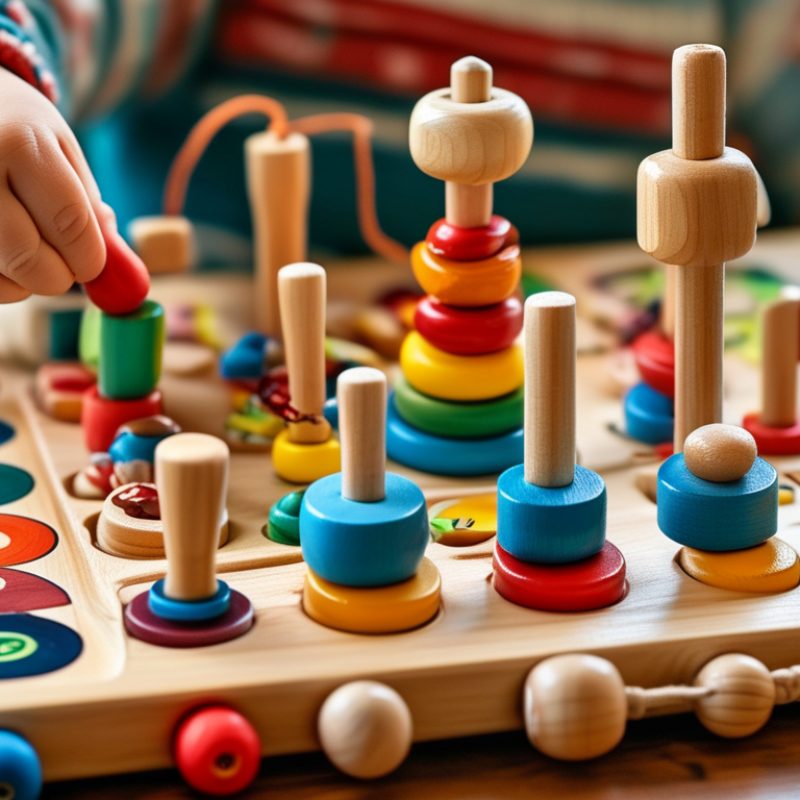
Fine motor skills are the small, controlled movements children make with their hands and fingers.
They help children grasp, release, rotate, and position objects with purpose. These actions support dressing, feeding, drawing, writing, and classroom independence. Development depends on hand strength, finger coordination, vision, attention, and repeated practice. It is gradual.
Wooden toys can provide meaningful practice because they usually invite active handling. A child may pinch small pegs, stack blocks, or place pieces into a simple puzzle. Turning a thick knob builds wrist rotation. Sliding beads across a wooden path encourages visual tracking and controlled release.
Pediatric occupational therapists often consider how a child approaches a task, not only whether it is completed. That distinction matters.
Adults can watch for effort, posture, and frustration during play. Offer smooth, age-appropriate pieces that fit comfortably in small hands. Then wait. Too much help can hide useful struggle, while too little can create unnecessary stress.
Not every wooden toy suits every child. A toy may be attractive but too difficult for a beginner. Another may seem simple yet support excellent repetition. Progress can look untidy.
A child might drop pieces repeatedly before gaining control. Caregivers can adjust the challenge by using larger parts, fewer pieces, or shorter play periods.
Regular, calm practice often matters more than buying many toys.
Choosing wooden toys by age matters more than choosing the most complicated set. A toddler may benefit from large stacking rings, chunky puzzles, and wide-handled shape sorters. These toys encourage grasping, releasing, and hand-eye coordination without demanding precise control too early. For preschoolers, threading beads, lacing boards, and simple construction pieces offer more refined practice. School-age children can try small interlocking parts, balance games, and wooden tools for supervised craft activities. Check that every piece suits the child’s developmental stage, not only the age printed on the package.
Tips: Watch how the child holds each piece. If fingers tremble or frustration rises quickly, choose an easier task. Sit nearby and demonstrate slowly, but allow the child to solve problems independently. Keep sessions brief, perhaps five to ten minutes, and stop when attention fades. Smooth surfaces, secure construction, and non-toxic finishes are important quality checks. Avoid toys with loose small parts for children who still explore objects with their mouths.
From practical observation, children often repeat one action they enjoy, such as fitting a peg or turning a wooden bolt. Repetition builds control, although it can look unproductive to adults. I have sometimes offered a toy that was too advanced, expecting faster progress. That usually created avoidance instead. A better approach is to adjust the challenge gradually and record small changes, such as a steadier pinch or fewer dropped pieces. When concerns about coordination persist, consult a qualified pediatric occupational therapist.
Wooden toys can turn hand-strength practice into purposeful play. A child grips a chunky piece, adjusts finger pressure, and places it into a simple puzzle. These movements train the small muscles needed for drawing, dressing, and using utensils.
The CDC’s 2022 developmental milestone update defines milestones as skills achieved by at least 75% of children at a specific age. By age two, many children can stack at least two small objects. This gives caregivers a practical, flexible reference rather than a strict test.
Start with grasping activities. Offer wooden rings, pegs, or large beads that fit comfortably in small hands. Ask the child to carry, transfer, and place them into a bowl.
Then introduce stacking. A five-block tower encourages wrist stability, visual planning, and controlled release.
Sorting adds precision and decision-making. Children can separate pieces by color, shape, or size using small baskets. Keep sessions short, perhaps five to ten minutes, and watch for tired fingers.
The American Academy of Pediatrics emphasizes play as a key setting for developmental learning, but adult direction should remain limited. I once corrected every misplaced piece too quickly. That reduced the child’s problem-solving time.
A better approach is to pause, observe, and offer one simple cue. Wooden toys are useful, but they are not a developmental diagnosis.
If a child loses skills or shows persistent difficulty, discuss observations with a qualified pediatric professional.
How to Improve Fine Motor Skills with Wooden Toys in 2026?
Wooden toys can turn small hand movements into purposeful practice. Puzzles teach children to match shapes, rotate pieces, and notice spaces. A child may pause before placing a piece. That pause matters. It shows visual planning, not failure. Start with large, easy puzzle pieces. Increase difficulty only when the child remains interested. Peg boards build controlled grasping and release. Encourage children to move pegs slowly between holes. Their fingers must guide what their eyes notice. I have seen children rush, miss the hole, and become frustrated. A calmer pace often works better.
Tips: Use a stable table and bright, even light. Offer three to five pieces at a time. Let the child choose the first move. Give specific feedback, such as “You turned it to fit.” Avoid correcting every attempt. Small mistakes provide useful practice.
Construction toys add another layer of coordination. Children connect blocks, balance towers, and adjust pressure with their fingertips. Ask them to copy a simple bridge, then create their own structure. This supports planning, spatial awareness, and problem-solving. Keep sessions short, especially when grip becomes tense. Supervise pieces that could become choking hazards for younger children. Progress is not always obvious. A tower may still fall, but the next attempt may use steadier hands. Maybe the activity was too difficult. Reflect, simplify, and try again later.
In 2026, wooden toy routines should support skill development without creating unnecessary risks. Choose toys matched to the child’s age, grip strength, and current abilities. Check for splinters, loose pieces, sharp corners, and damaged finishes before every session. Toys for children under three should not contain detachable parts that could cause choking. Keep the play surface clean and well lit. Watch closely.
A practical routine can last ten to fifteen minutes. Offer large beads, peg boards, stacking rings, or simple puzzles on a stable table. Invite the child to pick up, rotate, thread, and place each piece. These movements strengthen finger control, hand coordination, and visual planning. Let the child try independently before giving help. Use calm, specific language, such as “Turn the piece gently.” Stop when tired.
Pediatric occupational therapy principles support short, repeated practice rather than forced performance. Observe whether the child changes hands, drops pieces, or avoids certain movements. These details can guide safer adjustments. Reduce the number of pieces if the table becomes overwhelming. Clean wooden toys according to their material instructions, and let them dry fully. I sometimes expect progress too quickly. That can make play feel like testing. A better routine leaves room for mistakes, pauses, and genuine curiosity. Consult a qualified pediatric professional if difficulties persist or affect daily activities.
: Fine motor skills are controlled movements using the hands and fingers. They support grasping, feeding, dressing, drawing, and writing. Development happens gradually.
Wooden toys encourage children to pinch, rotate, stack, slide, and place objects. These actions build finger control and hand coordination. Active handling matters.
Puzzles, peg boards, beads, and construction toys can help. Children match shapes, guide pegs, and adjust pieces using visual information. Start simply.
Begin with large pieces and clear shapes. Offer three to five pieces at once. Let the child choose the first move. A pause can show careful planning.
Reduce the number of pieces or choose larger parts. Shorten the play session when the child’s grip becomes tense. Wait before helping. Too much assistance can hide useful practice.
A practical session may last ten to fifteen minutes. Stop when the child seems tired or overwhelmed. Short, calm practice often works better than forced performance.
Check for splinters, sharp corners, loose parts, and damaged surfaces. Use a stable table with bright, even lighting. Children under three should avoid detachable choking hazards. Supervise closely.
Consult a qualified pediatric professional when difficulties persist. Seek advice if problems affect feeding, dressing, drawing, or other daily activities. Dropped pieces alone do not prove a serious concern.
No. Effort, posture, attention, and frustration also provide useful information. A fallen tower may still show better pressure control. Progress can look messy. I may expect too much.
Fine motor skills are essential for early development because they support everyday tasks such as holding utensils, dressing, drawing, and writing. Can wooden toys improve fine motor skills? Yes, when children use thoughtfully designed wooden toys in age-appropriate ways, they can strengthen finger muscles, refine grasp control, and practice precise movements. Activities such as picking up small pieces, stacking blocks, sorting shapes, and fitting objects together encourage children to use their hands with purpose while developing patience and concentration.
Puzzles, peg boards, and construction toys also help improve hand-eye coordination by requiring children to guide their movements and solve simple challenges. In 2026, caregivers can create safe and effective play routines by choosing smooth, durable toys without sharp edges or loose hazards, supervising younger children, and adjusting activities to match each child’s abilities. Short, regular play sessions, combined with encouragement rather than pressure, can make fine motor practice enjoyable, practical, and developmentally appropriate.

Joodle Toy